Table of Contents
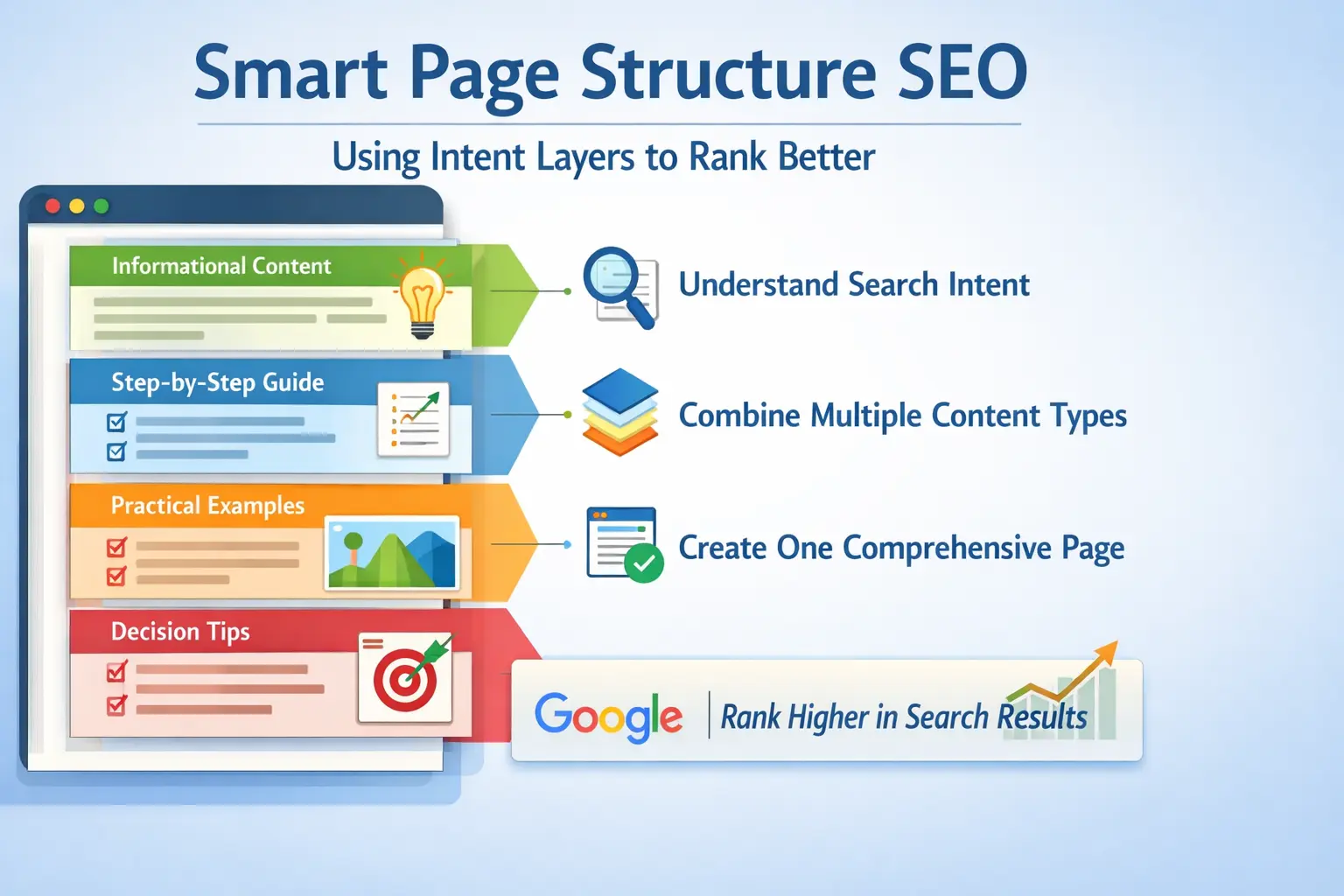
Smart Page Structure SEO is all about understanding how people search and how they read a page once they land on it. When someone types a keyword into Google, they may be looking for basic information, step-by-step guidance, or help in making a decision. Instead of creating many small pages for each question, Smart Page Structure SEO brings these ideas together in one place using intent layers. This approach makes the content easier to follow for users and easier to understand for search engines.
In this article, we will talk about how to improve page rank through SEO with intent layers, why page structure matters, and how this method helps a single page serve multiple user needs in a natural way.
How to Improve Page Rank Through SEO with Intent Layers
If you want to know how to improve page rank through SEO with intent layers, the first thing to focus on is search intent. A single keyword can have more than one meaning or purpose behind it. Some users want to learn the basics, some want guidance, and some are close to taking action.
When you use intent layers inside one page, you cover all these stages in a smooth flow. The reader does not feel lost, and they don’t have to jump to another website to find the next answer. This improves time on page and scrolling behavior, which are strong signs that users are finding value in the content.
With intent-based structure, the page becomes more meaningful instead of being a simple block of text. Google is able to read the structure, understand the sections, and see how each part connects to the main topic.
How Does On-Page SEO Improve Rankings in a Smart Structure
Many people ask how does on-page SEO improve rankings in a smart structure. On-page SEO is not only about keywords. It is about clarity, readability, and organization. When a page is arranged in a logical flow, readers move from one section to the next without confusion.
Short paragraphs, simple sentences, and clear headings make it easier for users to understand what they are reading. When users stay on a page and continue reading, it sends a positive signal to search engines.
Smart structure also helps search engines understand the purpose of each section. Instead of guessing what the page is about, Google can see that the content answers multiple related questions around the same topic. This improves the chances of ranking for different variations of the same keyword.
Which Type of Content Is Most Effective for Improving SEO Rankings
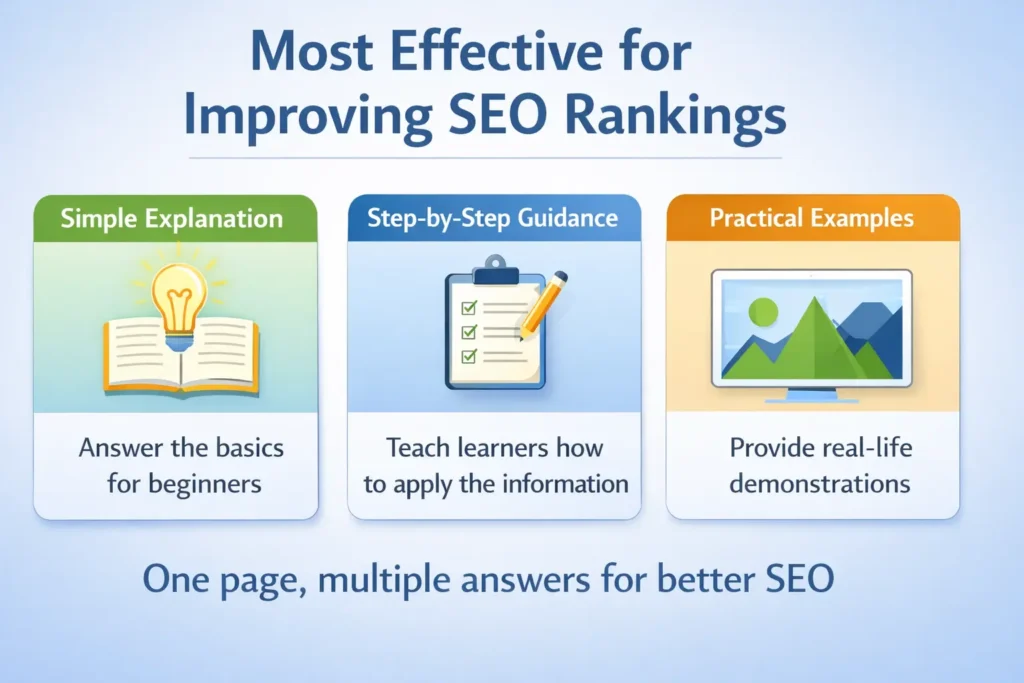
A common question people ask is which type of content is most effective for improving SEO rankings. The most effective content is the one that solves more than one problem for the reader.
If a page only answers one small query, users may leave soon after getting the first answer. But when a page explains the topic, guides the reader, and offers practical understanding, users stay longer and keep reading.
Intent-layered content supports beginners, learners, and decision-stage users together. It does not feel heavy or complicated. Instead, it feels like a natural flow where every next question is already answered within the same page.
This makes the page more helpful and increases its chances of ranking better over time.
How to Do SEO for Website Step-by-Step Using Page Structure
If you are learning how to do SEO for website step-by-step using page structure, the best place to start is planning before writing. First, understand the main search question. Then think about what users usually want to know next after reading the first answer.
Once you know the sequence of questions, you can arrange them into sections in a simple and meaningful order. Each section should be written clearly without unnecessary filler content.
This step-by-step planning allows you to build one strong page instead of multiple weak pages. It also makes future updates easier because the content is already structured around real user needs.
How Do You Approach Both On-Page and Off-Page SEO to Improve Rankings
Many people feel confused about how do you approach both on-page and off-page SEO to improve rankings. The truth is that both work together and not separately.
On-page SEO Rank helps users understand your content. Off-page SEO builds authority when other websites link to you.
When a page is useful, readers naturally share it, recommend it, and sometimes mention it in their own articles. This kind of reference builds natural backlinks, which strengthens off-page SEO.
So instead of chasing links first, focusing on useful intent-layered content can naturally create trust and credibility over time.
How to Rank Website on Google First Page with Intent Layers
People often search for how to rank website on Google first page with intent layers, hoping there is a quick trick. There is no shortcut, but intent-based page structure gives a strong advantage.
When a single page answers multiple search needs, users do not feel the need to leave and open another page. They scroll more, read more, and spend more time on the website.
Over time, these behavior signals help the page move higher in SEO Rankings. The growth may be gradual, but it usually remains stable because the content is built around real user expectations instead of temporary optimization tactics.
SEO Strategy Example One Page Multiple Intents
Here is a simple SEO strategy example one page multiple intents. Imagine a topic like how to start a blog. A basic page only explains what a blog is. But a smart page covers different stages like why someone may want to start a blog, how to set it up, what mistakes beginners make, and what tools they can use.
All of this is provided in one place with smooth transitions between sections. The reader does not feel overloaded, and they get answers to all related questions without leaving the page.
This improves trust, engagement, and reading depth, which are important indicators of strong content.
Why Smart Page Structure SEO Works Long-Term
Smart Page Structure SEO works long-term because it is built around people, not algorithms. Search trends may change, updates may roll out, but user questions usually remain connected to real needs.
When content is written with intent layers, it adapts well to future changes. It does not rely only on keywords. Instead, it focuses on clarity, depth, and usefulness.
Such pages continue to perform because they support users at different stages of their search journey.
A Short Wrap-Up
Using intent layers in Smart Page Structure SEO helps create content that feels natural, helpful, and easy to follow. It supports beginners, learners, and decision-ready users in a single page, without making the content heavy or confusing.
By combining thoughtful page structure, simple language, and user-focused writing, one page can rank for multiple queries and deliver steady growth over time.