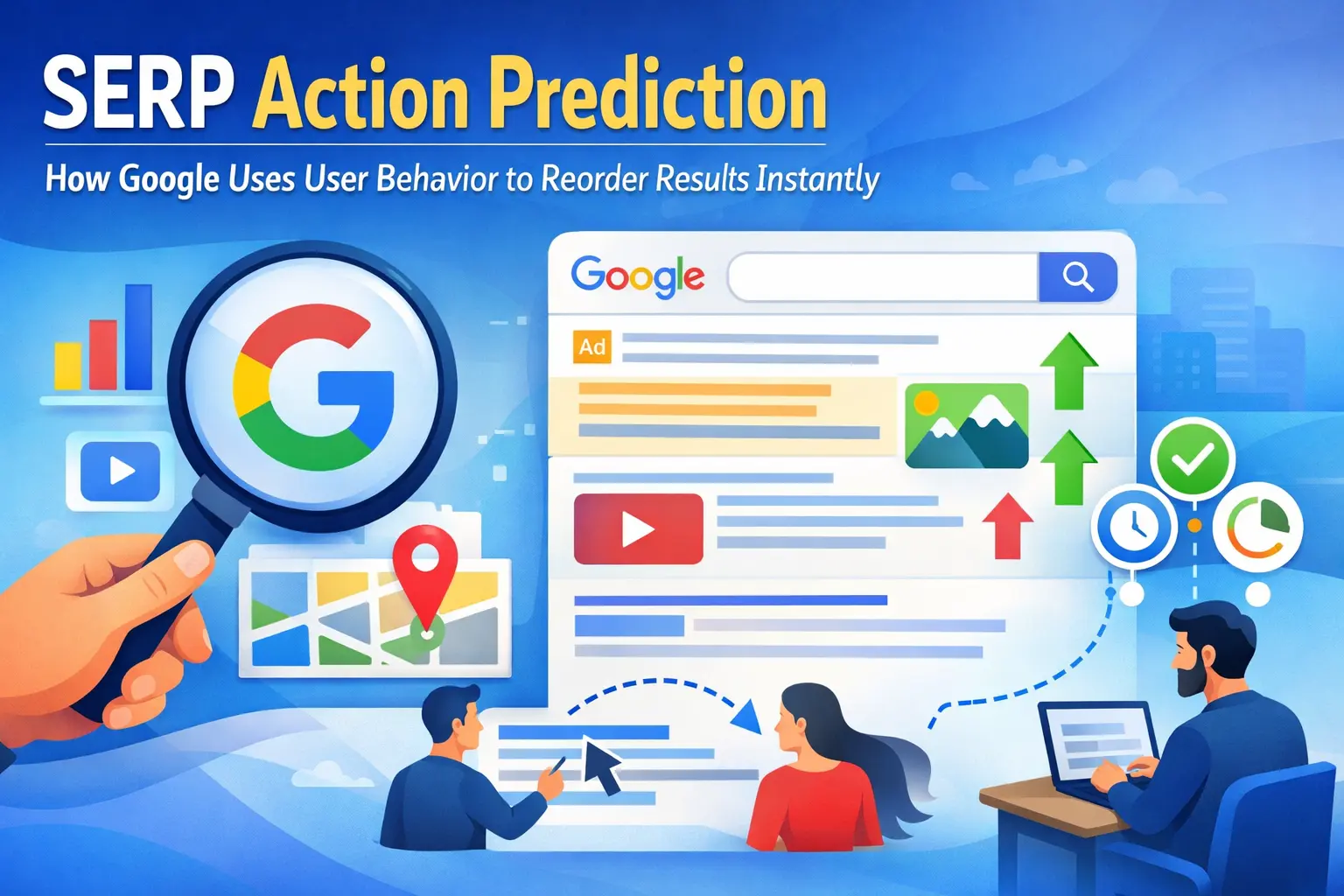
The way Google shows results on the search page is not random anymore. It reacts to how people search, what they click, and how long they stay on a page. This changing system is often understood as SERP action prediction. It means Google observes user actions and adjusts results so that people find useful information faster.
Table of Contents
In simple words, the search page is not static. It keeps learning and reshaping itself as people continue to search, scroll, and interact with results. That is why sometimes two people searching the same keyword may see slightly different results. The search system is almost like a live experiment, where user behavior helps Google decide what should appear first.
What Is SERP and Why It Matters
Before going deeper into SERP action prediction, it is important to understand what SERP actually means. SERP stands for Search Engine Results Page. It is the page that appears after someone types a query on Google. This page becomes the first screen where users decide what they want to open, read, or ignore.
The SERP matters because it guides the next step of the user. If the results look clear and relevant, users click confidently. If they look confusing, users scroll more or go back to search again. Over time, these actions help Google judge which results truly match user intent.
Earlier, SERPs used to be simple blue links. Today, they are designed according to modern search habits. People prefer quick answers, visuals, and results that match what they want at that exact moment. Because of this, SERPs now feel more dynamic and responsive.
What Are Google SERP Results
When someone asks what are Google SERP results, the answer is that they are the responses shown by Google for a particular search query. These results are not always the same for everyone. They can change based on location, device, search history, and language settings.
Google SERP results are built to serve what the user needs right now. If people searching a topic usually prefer a certain type of page, Google slowly pushes similar pages higher. This is where SERP action prediction plays an important role. It tries to understand what users are most likely to click and engage with.
Over time, the results you see are shaped by real user behavior instead of only technical signals.
SERPs Can Include More Than Just Links
Modern SERPs today include many elements beyond normal webpages. Instead of only showing text links, Google may show featured snippets, images, videos, local maps, news boxes, and sometimes shopping results. Many searches also display SERP Google Ads.
Even with ads, user behavior still matters. If users do not click a particular ad or skip it again and again, Google understands that it may not match their intent properly. On the other hand, an ad that gets regular clicks signals that users find it useful or relevant.
So, SERPs are now made of a mix of organic results, ads, and visual elements, all shaped by how users behave on the page.
What Is the Google Algorithm to Order Results
Many people wonder what is the Google algorithm to order results. The reality is that there is not just one single formula. Instead, Google uses many systems together. Content quality, backlinks, page structure, and relevance still matter, but user behavior adds an extra layer.
When users consistently choose one result instead of others, it sends a strong sign. If users quickly open a page and return to Google again, it may mean the page did not match their expectation. Over time, these patterns influence how high or low a page appears.
This process does not happen instantly like a switch, but it is fast enough to respond to real user choices.
How People Search on Google Has Changed
To understand SERP action prediction, it is important to see how people search on Google today. Most users do not read every result carefully. They scan headlines, glance at descriptions, and click the one that looks helpful at first sight.
People want clarity, simplicity, and trustworthy content. They avoid pages that look confusing or unrelated. Because of this behavior, Google learns what type of titles, layouts, and formats users prefer.
Over time, SERPs begin to reflect real user interest rather than only technical SEO strength.
Why User Behavior Influences SERP Order
Google’s main aim is to help users find answers with less effort. If users find useful information in fewer clicks, it creates a smooth search experience. That is why user behavior has become a natural part of SERP ordering.
Some actions that matter include which result users open first, how long they stay on the page, whether they scroll or interact, improve the SEO, and whether they return to the search page again. These behaviors silently guide Google in understanding what works and what feels mismatched.
Pages that match real intent slowly move up. Pages that disappoint users may drop in visibility.
The Role of First Impressions in SERPs
Since the SERP is the first thing visitors see in search results, the first impression matters a lot. A clear title, meaningful meta description, and readable URL help users feel confident before clicking. If a result does not look relevant, users simply ignore it and select another one.
Repeated actions like this send a predictable message to Google. A page that attracts more clicks and keeps users engaged gains positive signals. A page that keeps getting skipped may slowly lose its position.
This is where presentation and intent alignment play a big role.
SERP Action Prediction and Instant Reordering
Earlier, ranking updates used to take longer to reflect changes. Now, SERP action prediction allows small adjustments to happen more quickly. It does not mean rankings jump every minute, but micro-shifts can happen based on ongoing behavior.
Two users may see slightly different results for the same keyword because Google keeps testing which variations work better. This system allows search results to evolve naturally instead of staying fixed.
In short, SERPs feel more alive and adaptive than ever before.
What This Means for Content Creators
For bloggers, publishers, and website owners, SERP action prediction carries a simple lesson. Content should be written for real readers first. Clear answers, natural flow, and honest headings matter more than stuffing keywords.
If a page matches search intent and keeps readers engaged, Google slowly rewards it. If users leave the page quickly or feel misled, rankings may drop silently even if technical SEO looks correct.
User trust and clarity have become essential parts of visibility.
A Short Wrap-Up
SERP action prediction shows that search results do not stand still. They react, learn, and reshape based on real human behavior. Understanding what SERP is, how Google SERP results are ordered, and how people search on Google helps explain why user experience matters at every step.
When content aligns with intent and creates a smooth reading experience, it has a stronger chance of staying visible in modern search results.