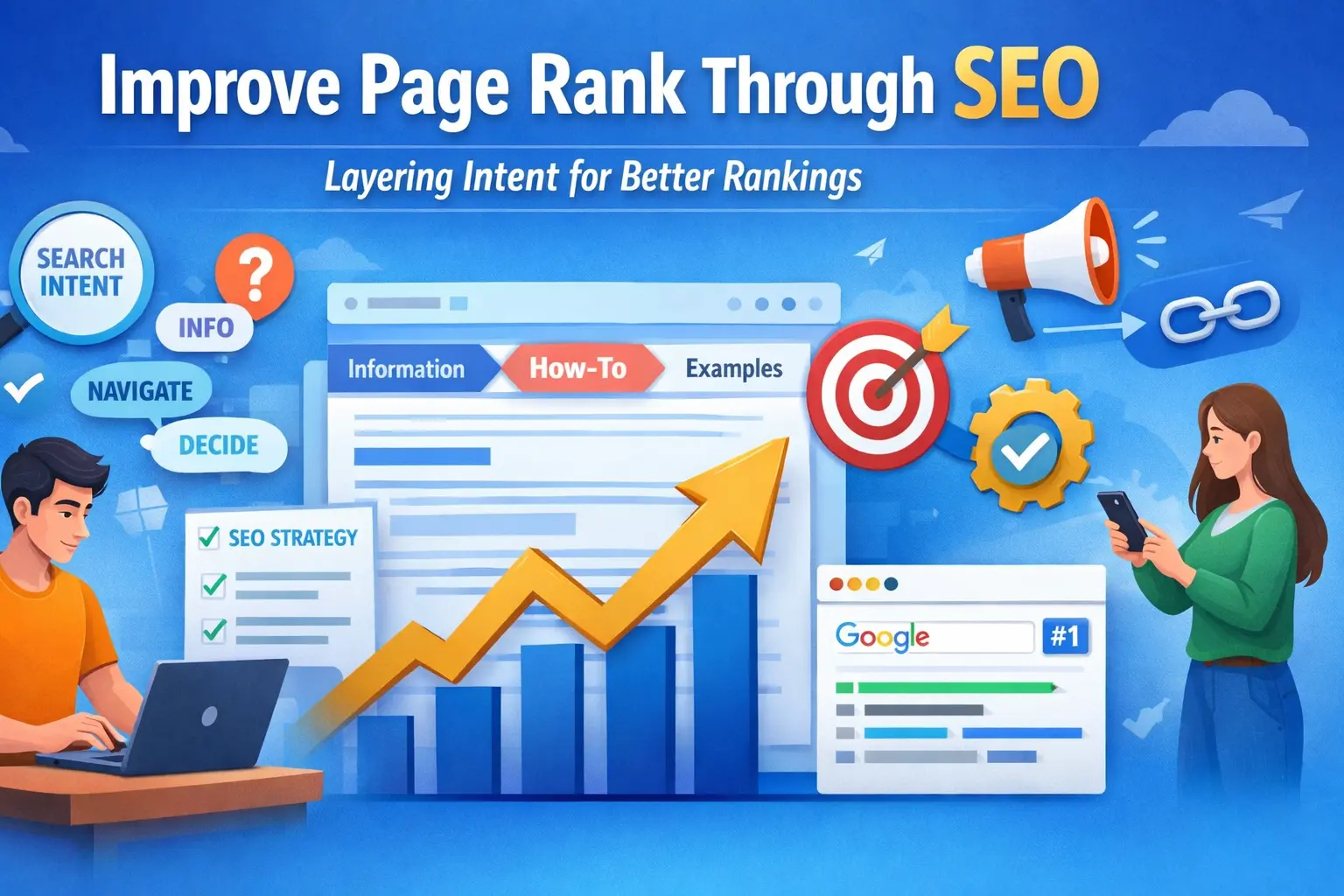
When we talk about how to improve page rank through SEO with intent layers, the real focus is understanding what a user wants when they search for something. A single keyword can have more than one meaning. Sometimes a person is just trying to learn something, sometimes they want to compare options, and sometimes they are already close to making a decision.
Table of Contents
Instead of choosing only one angle, intent-layered content tries to guide the reader through all of these stages in a natural and helpful way. This approach makes the page useful for beginners as well as people who already know a bit about the topic. When a page supports different user needs in one place, readers stay longer and explore more of the content, which supports better visibility in search results over time.
A smart page structure does not feel overloaded. It follows a smooth flow where topics connect naturally. The reader does not feel lost, and the page does not look like a random collection of topics. It feels like a conversation that slowly answers deeper and related questions.
How Does On-Page SEO Improve Rankings in a Smart Structure
People often ask how does on-page SEO improve rankings in a smart structure. On-page SEO is not just about keywords or adding phrases repeatedly. It is more about clarity, organization, and how easy it is for both users and search engines to understand your content.
Clear headings, short and meaningful paragraphs, and a smooth reading flow help search engines understand what each part of the page is about. When your content follows intent layers, every section of the page answers a different form of the main question. A user may start reading from the top, but as they scroll down, they keep finding the next logical answer they were about to search for.
This reduces the need to open another page to continue their search journey. Over time, this improves engagement and helps search engines see your page as a strong and complete resource on that topic.
Which Type of Content Is Most Effective for Improving SEO Rankings
A common question is which type of content is most effective for improving SEO rankings. The most effective content is the one that solves more than one user problem at the same time. If a page only answers one small question, users may leave quickly after reading only a few lines.
Intent-layered content combines explanation, guidance, and practical clarity in a single place. A beginner finds a simple introduction, a learner finds deeper guidance, and someone who wants real-world clarity finds relatable examples. This does not make the page overloaded. Instead, it makes the page useful for a wider range of readers.
Search engines value pages that help users stay longer and explore naturally. When users find meaningful answers step-by-step on the same page, they scroll more, read more, and return later when needed.
How to Do SEO for Website Step-by-Step Using Page Structure
When someone starts learning how to do SEO for website step-by-step using page structure, the first task should always be understanding user intent before writing anything. The topic should not be written randomly. It should move in the same direction a reader’s mind follows while searching.
A simple way to approach this is to start with the main question, then slowly address the next possible question that might come into the reader’s mind. Each section should feel like a natural continuation of the previous one. The content should not jump between unrelated ideas.
This kind of structure makes the page easier to update later, because all related information already lives in one place. It also helps the page grow stronger with time, as search algorithms continue to value meaningful structure and clarity.
How Do You Approach Both On-Page and Off-Page SEO to Improve Rankings
Another important topic is how do you approach both on-page and off-page SEO to improve rankings. These two work best when they support each other instead of working separately.
On-page SEO builds trust with the reader through clarity, helpful content, and smooth structure. Off-page SEO strengthens authority through links, mentions, and references from other platforms. When a page uses intent layers, users find value in it, which encourages natural sharing and referencing over time.
Instead of forcing backlinks, helpful content attracts them naturally. This balance creates a healthy foundation where both on-page and off-page SEO grow together.
How to Rank Website on Google First Page with Intent Layers
Many people search for how to rank website on Google first page with intent layers, hoping for a single trick or shortcut. There is no single quick solution, but intent-layered content gives a strong and reliable advantage.
When a single page satisfies different user needs related to the same topic, search engines do not need to push users toward multiple separate pages. Over time, this consistency supports better stability in rankings.
The process may take time, but pages built with strong structure and natural user guidance often perform more consistently across updates because they are written for real search behavior instead of temporary algorithm trends.
SEO Strategy Example One Page Multiple Intents
Here is a simple SEO strategy example one page multiple intents. Imagine someone searches for how to start a blog. A basic page may only explain what a blog is. But a stronger, intent-layered page guides the user slowly from understanding the topic to actually taking action.
The page might begin with what a blog is, then move into why someone may want to start one, followed by simple setup guidance, common beginner mistakes, and useful tools to use in the process. Without sounding forced, the page gently supports readers at different learning levels.
Users feel as if they are being guided step-by-step instead of being left halfway through their journey. This results in longer reading time, better trust, and stronger engagement, which indirectly strengthens search performance.
Why Smart Page Structure SEO Works Long Term
Smart page structure SEO works long term because it is built around real user behavior rather than temporary shortcuts. Intent layers encourage you to think like a reader instead of thinking only about keywords.
Instead of publishing many thin pages that barely cover the topic, you create fewer but stronger pages that stay relevant for a longer time. These pages are easier to refresh, expand, and adapt as trends and search patterns evolve.
When a page genuinely supports the user journey from learning to understanding to decision-level clarity, it keeps its value over time. Readers remember such pages and are more likely to revisit or share them with others.
Final Wrap-Up on Using Intent Layers for Better SEO Page Structure
Using intent layers in a smart page structure brings your content closer to how real users search and read online. It supports on-page clarity, improves reading flow, and gives search engines a clear understanding of your topic.
Instead of depending on shortcuts, this approach focuses on meaningful structure, natural explanations, and thoughtful connection between sections. One strong and well-structured page can serve multiple search needs, support better engagement, and gradually build stronger visibility in search results over time.