
Have you ever noticed that Google Search Algorithm Works seem to stay at the top of Google search results no matter what? Even when Google rolls out updates and rankings shuffle, these pages remain steady. That’s what SEO experts often call the Ranking Resistance Score. It’s a way of understanding why some pages hold their ground while others move up or down with every change.
Table of Contents
In simple terms, a high Ranking Resistance Score means your page is reliable, useful, and meets Google’s expectations. But how exactly does Google decide which pages stay on top? Let’s take a closer look.
How does Google Rank Search Results ?
When you search for something on Google, it doesn’t just look at the words you typed. Google Rank Search Results considers hundreds of signals to show the most helpful results. It checks things like relevance, content quality, user behavior, and whether the page answers the searcher’s intent.
If your page satisfies real user needs consistently, your Ranking Resistance Score improves. This is why some pages maintain their rankings even during big algorithm updates. Google Rank Search Results wants to show results that are useful, trustworthy, and clear, and it rewards pages that deliver these consistently.
How does Google Page Rank Work ?
Google Page Rank is one of the oldest Google signals, and it’s still important today. It measures how trustworthy a page is based on the links pointing to it. But not all links are equal. A link from a well-known, relevant site is much stronger than one from a low-quality site.
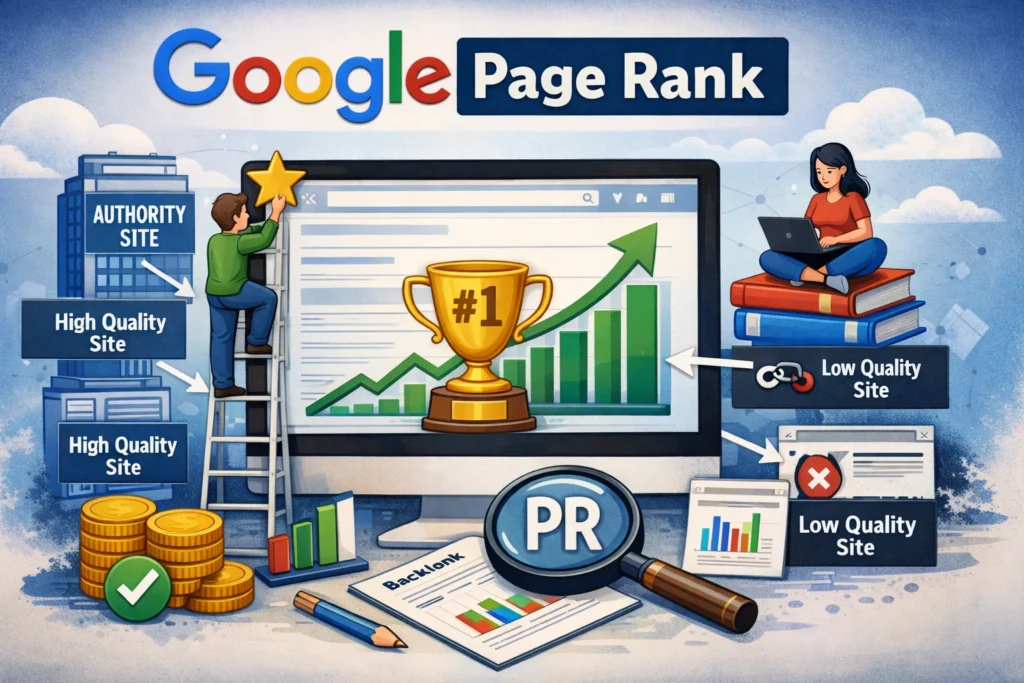
Pages with strong backlinks tend to resist ranking drops better. That’s why internal linking and building natural backlinks are essential for long-term SEO performance. A solid PageRank can boost your Google Page Rank because it signals credibility and authority to Google.
How a Search Engine Determines Which Pages to Rank Higher
Search Engine Determines looks at more than just content. It evaluates many aspects of a page, including how clearly it answers a query, whether users stay or leave quickly, how fast it loads, and whether it’s easy for crawlers to read. Search Engine Determines also checks if your content is fresh and accurate, and whether it connects well with the rest of your website.
Search engines look at more than just text. They pay attention to:
- How clearly your page answers the search query
- Whether users stay or leave quickly
- How smoothly your content loads
- Whether your structure is easy for crawlers
- How fresh and accurate your information is
- Whether your content connects well to the rest of your site
If your page performs well in these areas, it naturally ranks higher and becomes more resistant to changes. Pages that consistently offer smooth experiences and clear answers tend to keep their top spots.
Google Ranking Factors 2026
There are hundreds of signals Google considers, but some factors are more important than others. These include content quality, page experience, load speed, mobile usability, internal linking, backlinks, and topical depth.
- Content quality and relevance
- Page experience
- Page load speed
- Mobile usability
- Internal linking
- Backlinks
- Topical depth
When a page covers most of these elements well, it becomes more difficult for updates to push it down. These ranking factors quietly support your Google Ranking Factors 2026, helping your page maintain stability over time.
Google Search Ranking Algorithm and Resistance
Google Search Ranking Algorithm looks at a page from multiple angles. It checks whether the content matches search intent, satisfies users, and shows trust signals. How your page fits within a broader topic also matters.

A newer concept in SEO is the “Google Search Ranking Algorithm”, This is the moment when Google decides whether your page should stay in its position or move. Factors like user behavior, page clarity, and ongoing search intent influence this decision. Pages that align with these elements naturally become more resistant to ranking drops.
Google Page Rank Algorithm and Long-Term Stability
While Google Page Rank Algorithm alone doesn’t guarantee a top position today, it still contributes to long-term stability. Google combines it with other signals such as user interaction, mobile performance, and real-world relevance.
Pages that perform well across these dimensions tend to resist changes better. This shows that links are important, but they’re not the only factor. Google values well-rounded pages that offer consistent value and a smooth user experience that Improve Page Rank Through SEO.
Strengthening Your Ranking Resistance Score
Improving your page’s stability isn’t about shortcuts. It’s about consistent quality and attention to detail. Keeping your content updated, maintaining a clear structure, using internal links, and optimizing for mobile and speed all help.
- Keep your content updated in meaningful ways
- Maintain a clear structure with proper headings
- Use internal linking to build topical strength
- Ensure fast loading and mobile-friendly formatting
- Avoid unnecessary keyword stuffing
- Focus on long-term relevance
- Fix broken links and technical issues quickly
Fixing broken links, avoiding unnecessary keyword stuffing, and focusing on long-term relevance also boost your Ranking Resistance Score. Over time, Google recognizes these pages as dependable, making them less likely to drop in rankings during updates.
Wrap-Up
The idea behind a Ranking Resistance Score is simple: Google wants to show the most useful, trustworthy, and relevant pages. Pages that deliver a clear answer, load quickly, and keep readers engaged are more likely to stay at the top.
Focusing on providing real value, organizing your site effectively, and maintaining technical health will give your pages a better chance of staying strong. The key is consistency. When your content meets user needs and keeps Google happy, your rankings are more resistant to change—even as the search landscape evolves.